
Honey has an image problem.
Most people expect honey to look smooth, runny, uniformly golden and dependably sweet. One jar should look and taste much like the next, regardless of the label.
According to Hive & Earth co-founder Liana van Rensburg, this expectation misses what makes genuine honey distinctive.
“True honey is not merely a sweetener,” she explains. “It is a living record of a landscape.”
Honey reflects its surroundings
Genuine honey changes with the seasons.
Its colour, texture and flavour depend on geography, weather and the plants flowering while bees forage.
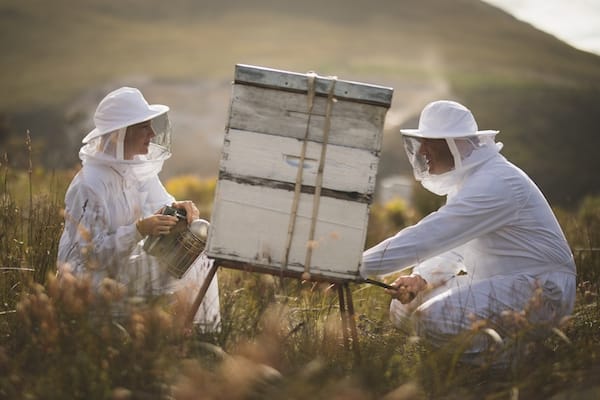
Hive & Earth co-founder Danie Vorster has worked as a beekeeper for 20 years. He says the company does not buy and repackage bulk honey.
“We are not honey traders who buy and repackage bulk liquids. We are beekeepers, and our mission is to re-educate the palate on what genuine, unadulterated honey is meant to be.”
Honey has its own version of terroir
Wine reflects the soil, climate and location where its grapes grow. Honey follows a similar principle.
The plants surrounding an apiary influence every batch produced by the bees.
A spoonful of honey reflects a particular place, season and flowering period. The same apiary sometimes produces a different flavour the following year.
The bees and hives stay the same. The flowers change.
What gives fynbos honey its flavour?
In the Western Cape, bees forage across fynbos, one of the most botanically diverse types of vegetation on the planet.
Fynbos honey does not come from one neat floral source. Each jar reflects the plants flowering in a particular valley during the foraging period.
These plants include:
- Erica
- Protea
- Restio
- Buchu
- Wild rosemary
The combination changes between areas and seasons. As a result, batches differ in colour, texture and flavour.
This variation forms part of the honey’s identity.
What does Bloom to Bottle mean?
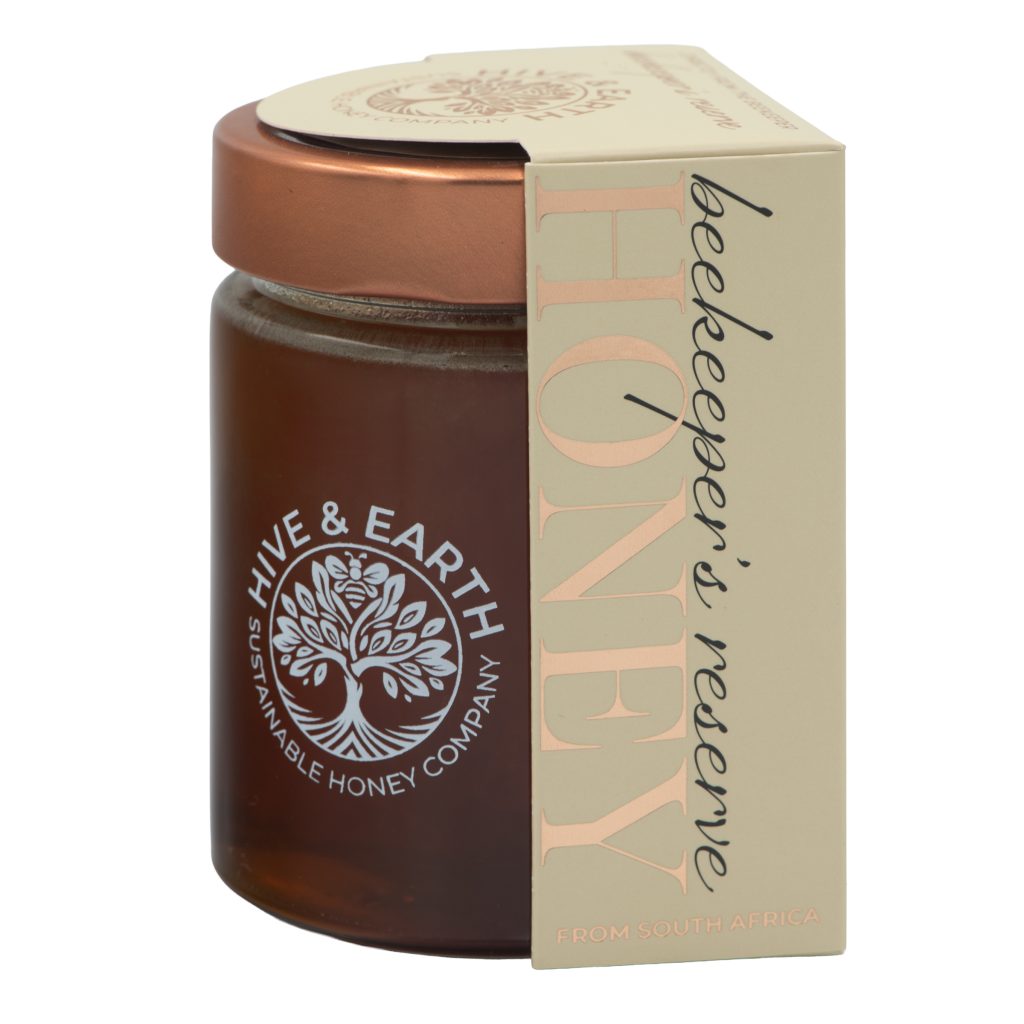
Hive & Earth describes its process as “Bloom to Bottle”.
The approach starts with understanding the surrounding environment before placing the bees.
Honey is then harvested in small, traceable batches rather than blended into one uniform flavour.
Keeping batches separate preserves the characteristics of each location and flowering period.
Why genuine honey crystallises
Hive & Earth does not heat-treat or micro-filter its honey to maintain a glossy and permanently pourable appearance.
Crystallisation is not a sign of poor-quality honey or a mistake made by the bees.
“It is a natural biological process that occurs in pure, raw honey,” says Vorster.
A crystallised jar still reflects the season, flowering plants and environment where the bees produced the honey.
More than sweetness in every jar
Genuine honey was never meant to look and taste identical throughout the year.
Each jar carries the record of a past season, a particular location, the work of a bee colony and the judgement of beekeepers who understand when to harvest.
Hive & Earth’s website is being rebuilt ahead of a new launch. Its honey is already available through Poetry.
Read Essential Flavours online