

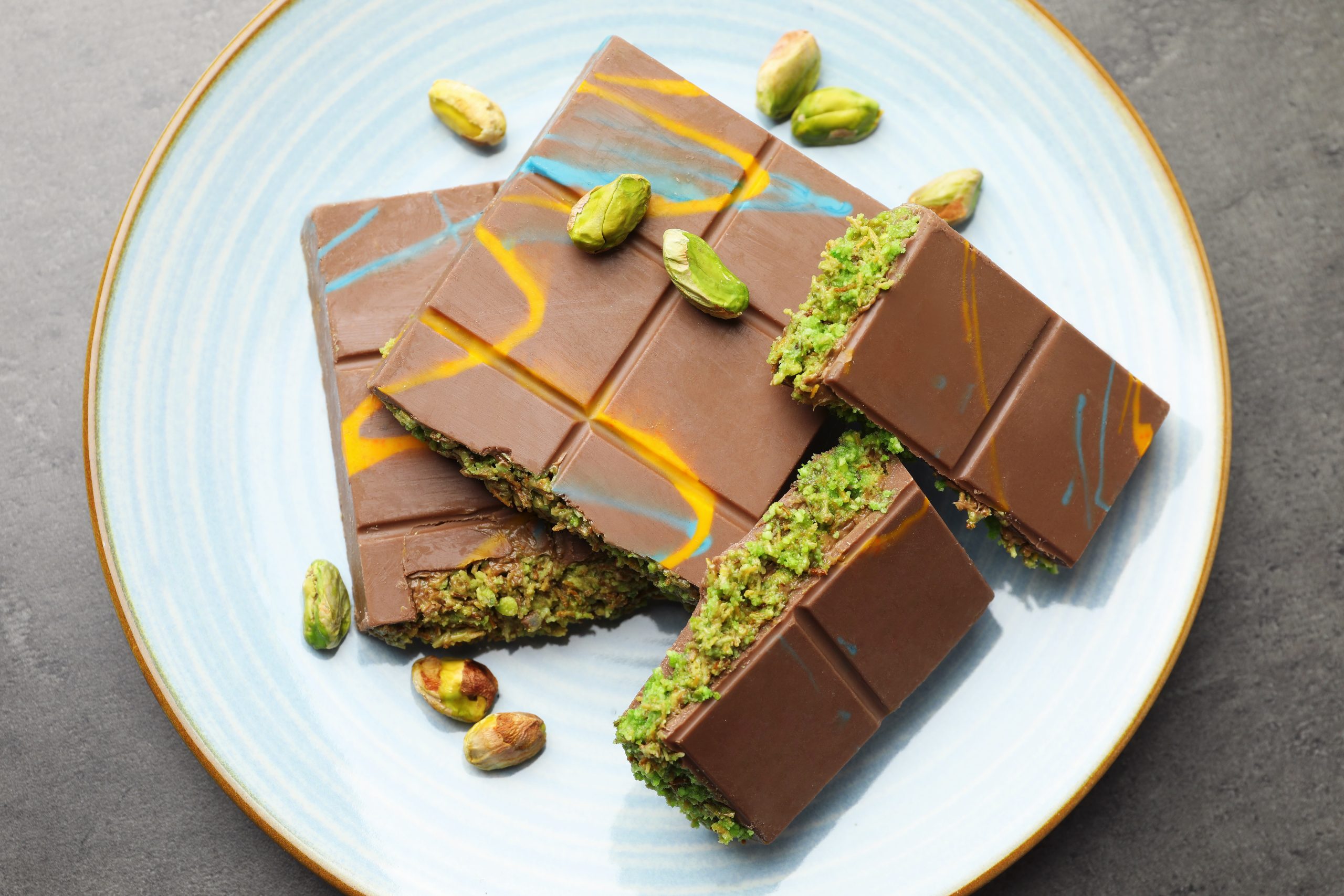
As World Chocolate Day arrives on the 7th July, there’s one confection dominating social media feeds and selling out faster than a Taylor Swift concert: Dubai chocolate. What began as a regional treat has exploded into a global indulgence, turning humble cocoa into haute couture. Fans are lining up for hours, shelling out big bucks, and declaring it worth every dirham. This isn’t just chocolate… it’s the Beyoncé of bonbons.
The craze began with Sarah Hamouda, a British Egyptian entrepreneur who founded Fix Dessert Chocolatier in Dubai as a side project, sparked by her pregnancy cravings. Working alongside Filipino chef Nouel Catis Omamalin, the duo created the now-famous “Can’t Get Knafeh of It” chocolate bar in 2021. Their creation cleverly combines traditional Middle Eastern flavours with modern confectionery techniques, featuring crispy kataifi pastry, pistachio and tahini paste, all wrapped in a milk chocolate casing.
The chocolate’s meteoric rise to fame can be traced to December 2023, when Ukrainian food influencer Maria Vehera posted a TikTok video of herself eating the bar in her car, which has since garnered over 122 million views. The video’s success lies in its ASMR appeal – the satisfying crunch of the kataifi pastry and the gooey pistachio filling create irresistible audio-visual content that perfectly captures social media attention.
From Dubai streets to global shelves
What started as 500 daily orders available exclusively through food delivery apps in Dubai quickly became a worldwide obsession. The original bars, priced at around $20 each, often sell out within minutes, leading to accusations from customers that the brand uses scarcity as a marketing tactic.
The demand has been so intense that a “chocolate black market” has emerged, with bars appearing in South Africa at exorbitant prices. Recognising the global appetite, major chocolate manufacturers have jumped on the trend. Swiss chocolatier Lindt launched its own Dubai Style Chocolate bar, which has now arrived in South African stores including Sandton City, Fourways Mall, Mall of Africa, and Woolworths outlets.
However, South African chocolate enthusiasts are facing their own supply challenges. Following its launch on 2 May 2025, Lindt Dubai Style Chocolate has been selling out within days at most South African locations, leaving many disappointed customers checking store after store for restocks.
The secret behind the success
Dubai chocolate’s appeal lies in its unique fusion of textures and flavours. The dessert traces its roots to knafeh, a traditional Arabic cheesecake with crispy vermicelli-like pastry, syrup, and pistachios that’s been a Middle Eastern staple since the 13th century. By incorporating these familiar regional flavours into a familiar chocolate bar format, the creators struck culinary gold.
The success has inspired countless variations worldwide. Harrods has launched a knafeh croissant, whilst Singaporean dessert shops are creating knafeh-influenced tiramisus. Even home bakers are getting creative, with thousands of DIY tutorials flooding social media platforms.
A global movement
As World Chocolate Day celebrates all things cocoa, Dubai chocolate represents more than just another sweet treat – it’s a testament to how traditional flavours can be reimagined for modern palates. Sarah Hamouda reflects on the phenomenon with amazement: “It’s insane what’s been happening. We get messages from people saying, ‘thank you for inspiring us to be creative at home’.”
For South African chocolate lovers still hunting for their fix, persistence is key. Chocolate Day might just be the perfect excuse to join the hunt for the world’s most talked-about chocolate bar.