From millennial hipster bakeries in London dishing up litchi flower croissants to Parisian boulangeries serving up signature ‘le crookie’ to Gen Z patrons, baking is on the rise, having found a new home as an artisanal craft among young consumers.
At the heart of it all is the humble egg, which continues to form the backbone of even the most adventurous new cakes and bakes.
Although these young foodies are driving the trend, research shows there’s an increased appetite for goods made according to traditional baking methods across a wide demographic of consumers.
To give you an idea, the artisan bakery market was valued at $33.7 billion in 2023 and was expected to grow to $47.9 billion by 2030.
Young bakers are constantly raising the bar, developing fresh recipes and novel ways of using fundamental ingredients like eggs to produce mouthwatering pastries, cakes and bite-sized desserts.
Petit fours, cream cakes, scones and vanilla sponges are all back on the menu as high tea makes a comeback the world over.
Back in 2022, Pinterest declared that high tea was the new happy hour, as searches for ‘tea party aesthetic’ and ‘baking recipes’ began to soar on the platform. Last year alone, searches for ‘afternoon tea party ideas’ increased by 165%.
Topping the list of tea party themes in 2025 is the traditional high-society English tea party, Bridgerton style. This menu includes favourites such as truffled egg salad and baked egg custard treats.
The reason that eggs continue to dominate in bakers’ kitchens is that they’re more than just a pretty face when it comes to baked goods; they play a vital role in pulling the whole lot together!
Renowned pastry chef Cédric Grolet says eggs serve multiple purposes. They act as emulsifiers, helping to combine fats and liquids smoothly, and contribute to the structure of the baked item. He also frequently uses egg wash, a mixture of beaten eggs brushed onto pastries before baking to achieve a golden-brown crust.
Award-winning French pastry chef Dominique Ansel, best known for his invention of the Cronut (a croissant-doughnut hybrid made with eggs), is a huge fan of baking with eggs because of their incredible versatility.
He notes that whole eggs are binders, helping to hold ingredients together and increase the viscosity of batters and doughs, while egg yolks add richness and flavour, and can be incorporated to provide structure and moisture. Whipped egg whites, he says, are the only way to obtain a light and airy result.
In his famous Buche de Noël, he uses both whipped egg whites and yolks, demonstrating how different parts of the egg can be used to create different textures.
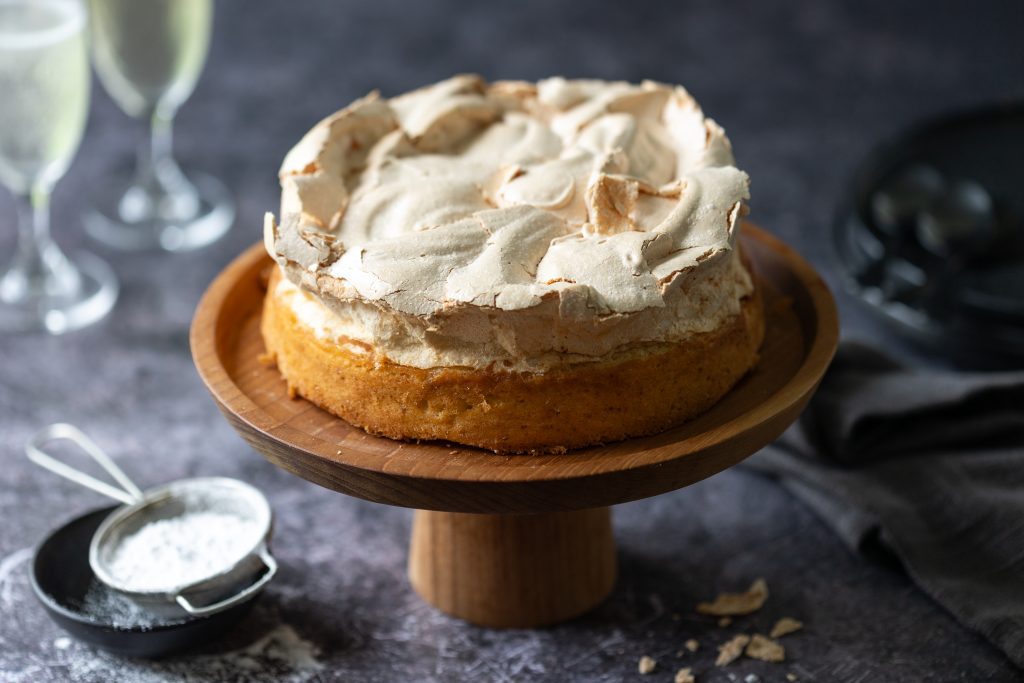
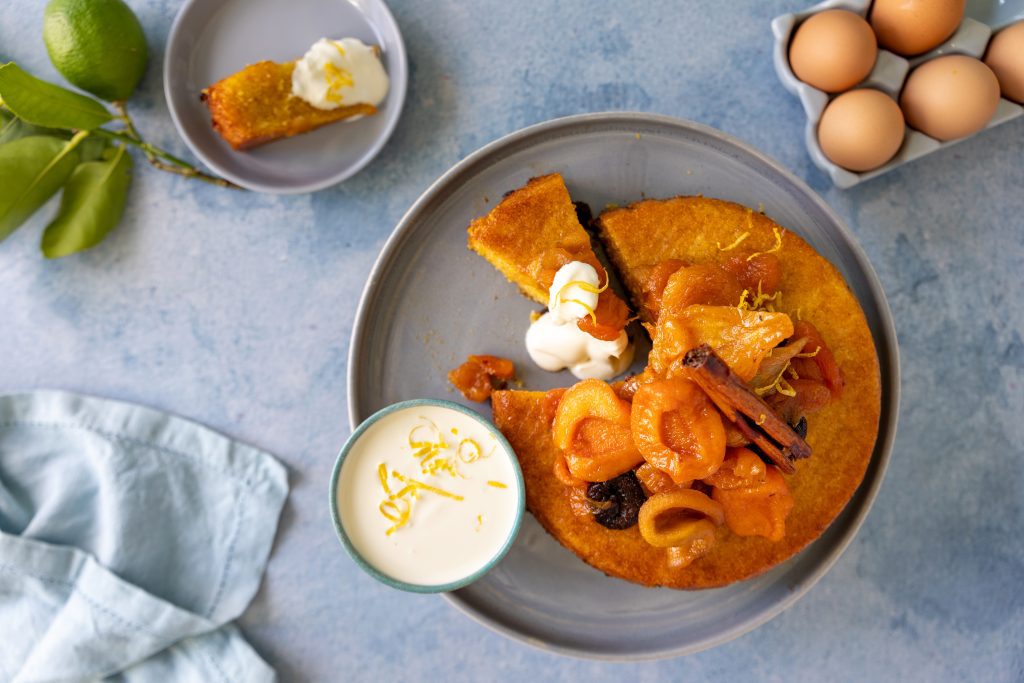
This season, we’re giving a nod to artisanal bakers with Polenta Cake and trendy high tea with Crispy Meringue Cake. Stock up on eggs and try your hand at these exciting new bakes!
For further information and recipes, visit www.sapoultry.co.za, like EGGcellentFood on Facebook and follow us on Instagram @eggcellentfoodsa.
POLENTA CAKE
Serves 12
Preparation time: 25 minutes
Cooking time: 1 hour
Cost per recipe: Serves 12 for under R150
INGREDIENTS
For the polenta cake
- 200g baking margarine, softened
- 250ml (1 cup) castor sugar
- 7.5ml (½ tablespoon) vanilla essence
- zest of 2 lemons
- 4 eggs
- 330ml (1⅓ cups) fine polenta
- 7.5ml (½ tablespoon) baking powder
- 2.5ml (½ teaspoon) salt
For the stewed fruit
- 200g packet dried fruit mix
- 125ml (½ cup) castor sugar
- 1 cinnamon stick
- 875ml (3½ cups) brewed Rooibos tea
METHOD
- For the cake, preheat the oven to 180°C. Line a 20cm cake tin with baking paper.
- Beat together the butter and sugar until pale and creamy. Add the vanilla, zest and eggs, one at a time, beating until well combined.
- Combine the polenta, baking powder and salt. Fold through the wet ingredients. Spoon into the prepared tin and level the top.
- Bake for about 55 minutes or until a testing skewer comes out clean. Cover with foil if it browns too much.
- Meanwhile, for the stewed fruit, heat all the ingredients on medium heat in a medium saucepan, stirring occasionally, for about 20 minutes or until the fruit starts to soften and a slightly thickened sugar syrup forms. Discard the teabag.
- Slowly drizzle the hot syrup (from the fruit) over the cake as soon as it comes out of the oven to soak into the cake. Cool to room temperature.
- Turn the cake over onto a serving dish and serve it topped with the stewed fruit.
TIPS:
- If you can’t find fine polenta, blitz polenta in a food processor until a flour consistency. Sift.
- Serve with sour cream, if you like. Make your own by mixing 250 g tub cream with 15 ml (1 tbsp) lemon juice. Set aside for a few minutes to thicken slightly.
CRISPY MERINGUE CAKE
Serves 12
Preparation time: 30 minutes
Cooking time: 45 minutes
Cost per recipe: Serves 12 for under R70
INGREDIENTS
For the cake
- 125ml (½ cup) softened baking margarine
- 180ml (¾ cup) sugar
- 2 eggs
- 5ml (1 tsp) vanilla essence
- 60ml (¼ cup) plain yoghurt
- 250 ml (1 cup) self-raising flour
- 2.5 ml (½ tsp) salt
For the meringue
- 3 egg whites
- 2.5ml (½ tsp) cream of tartar
- 180ml (¾ cup) castor sugar
- icing sugar, for dusting
METHOD
- For the cake, preheat the oven to 180°C. Line a deep 19cm springform cake tin with baking paper.
- Beat together the margarine and sugar until creamy.
- Add the eggs, one at a time, beating until incorporated. Beat in the vanilla and yoghurt until combined. Fold in the flour and salt until smooth.
- Spread into the prepared tin. Bake for about 15 minutes or until the cake is puffed up and slightly golden.
- Meanwhile, for the meringue, beat the egg whites until foamy. Beat in the cream of tartar until soft peaks form. Slowly add the castor sugar while beating until glossy with medium peaks.
- Working quickly, carefully spread the meringue evenly over the top of the cake. Bake for about 30 minutes or until the meringue is crisp. Cool. Turn out onto a cake stand and dust with icing sugar.