

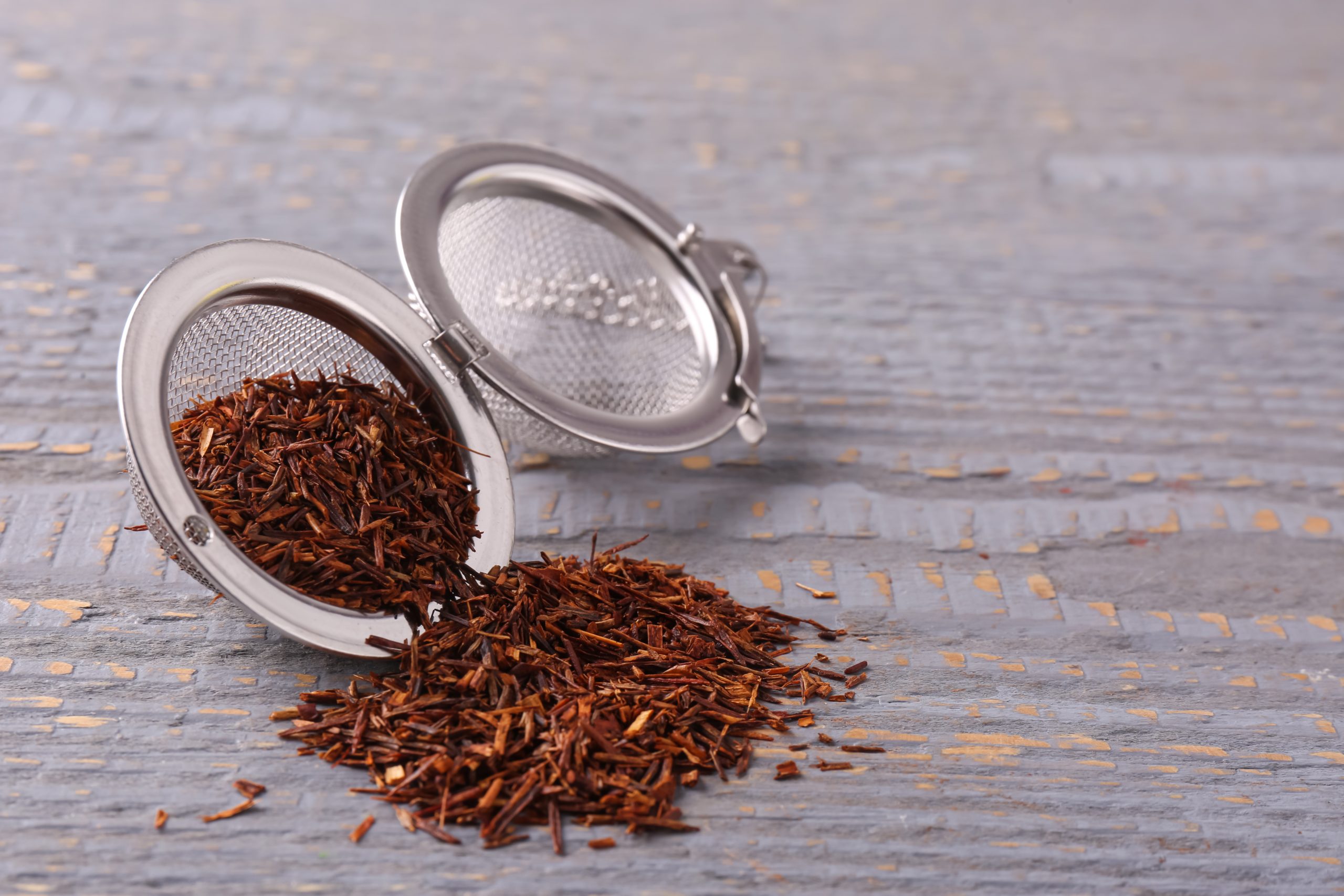
For South Africans, Rooibos isn’t just a beverage; it’s a cultural institution. From childhood cups sweetened with honey to sophisticated blends served in upmarket hotels, this indigenous red bush infusion has captured hearts worldwide. But beyond its comforting warmth and naturally sweet flavour lies a fascinating world of chemistry that can transform your daily brew from ordinary to extraordinary.
Chemistry professor Michelle Francl from Bryn Mawr College in Pennsylvania has spent years studying the molecular magic behind tea brewing. Her research into Camellia sinensis, the plant behind traditional black and green teas; has revealed surprising insights about how South Africa’s unique Aspalathus linearis compares in the complex world of tea chemistry.
What makes rooibos different
Unlike its caffeinated cousins, Rooibos follows an entirely different chemical pathway. Traditional teas derive their stimulating effects from caffeine, theobromine, and theophylline; alkaloids that create that familiar energy boost and subtle bitterness. Rooibos, however, produces trigonelline, the same alkaloid found in coffee and fenugreek seeds.
This crucial difference explains Rooibos’s gentle character. Trigonelline doesn’t stimulate the nervous system; instead, research suggests it may help regulate blood sugar levels, making Rooibos an ideal evening beverage or choice for those seeking caffeine-free alternatives.
The brew’s mellow nature also stems from its lower tannin content. These polyphenols, responsible for the dry, puckering sensation in traditional teas, are significantly reduced in Rooibos, creating its characteristically smooth, sweet profile.
The aromatic chemistry of comfort
That distinctive Rooibos aroma that fills your kitchen? It’s the result of volatile compounds like linalool and geraniol; the same molecules that give roses and lemongrass their distinctive scents. These compounds are most potent when the herbal infusion is freshly brewed and hot, which explains why that first aromatic waft from your teapot is so intoxicating.
The beautiful reddish colour of this cuppa also responds to chemistry. Adding lemon juice lowers the pH and brightens the hue, creating a more vibrant cup whilst potentially enhancing certain flavour compounds.
The art of optimal extraction
Here’s where science becomes practical. The steeping process is essentially a careful extraction of hundreds of compounds, each contributing to your cup’s final flavour profile. Lighter, water-soluble molecules emerge first, whilst larger polyphenols require more time to fully infuse.
For Rooibos specifically, research reveals that maximum antioxidant extraction occurs with boiling water and a 10-minute steep. Beyond this point, exposure to oxygen begins degrading these beneficial compounds, making timing crucial for both flavour and health benefits.
Green vs red: the fermentation factor
Whilst most South Africans automatically reach for traditional red rooibos, the unfermented green variety offers significantly higher antioxidant levels. The fermentation process that creates red Rooibos’s familiar colour and mellower taste is actually an oxidation reaction that reduces beneficial compounds like aspalathin; a rare antioxidant almost exclusive to the rooibos plant.
For maximum health benefits, green rooibos reigns supreme, though it requires proper storage to preserve its potent aspalathin content, which degrades with time and oxygen exposure.
Why your water matters
The mineral content of your brewing water plays a surprisingly important role. Hard water with high mineral content can create unwanted interactions with polyphenols, potentially dulling flavours and creating surface films. Filtered water helps preserve Rooibos’s clean, sweet taste profile.
The sweet science
Many Rooibos enthusiasts notice enhanced sweetness with longer steeping times. The science suggests this could be due to increased extraction of maltol, a natural flavour enhancer, and vanillin; the same compound that gives vanilla its signature sweetness. This natural sweetening effect makes Rooibos particularly appealing to those reducing sugar intake.
Your perfect cup formula
Based on chemistry rather than tradition, here’s the scientifically optimised brewing method:
- Choose green rooibos for maximum antioxidants, or quality fresh red rooibos for traditional flavour
- Use filtered water when possible
- Bring water to a full boil (100°C)
- Steep for exactly 10 minutes
- Enjoy immediately for best flavour and antioxidant retention
Beyond the cup
Understanding rooibos chemistry transforms the simple act of brewing tea into a mindful practice. Each cup represents millions of years of plant evolution, decades of South African agricultural expertise, and the precise molecular dance that creates one of the world’s most soothing beverages.
The next time you brew a cup, remember that you’re not just making a herbal infusion; you’re conducting a beautiful experiment in chemistry, one that connects you to the unique terroir of the Western Cape and the generations of knowledge that brought this remarkable plant from mountain slopes to your kitchen.
As Professor Francl notes, “Brewing tea is not just an art. It’s a beautifully balanced act of chemistry.” In Rooibos, South Africans possess one of nature’s most perfect examples of this delicious science.